


The Hidden Price Tag Behind “Free” Storage
When Rajesh, a Mumbai-based CA firm partner, was told his “free” Google Drive was costing him ₹8.5 lakh annually, he was shocked. Like most businesses, he assumed Google Drive’s collaborative features and familiar interface made it the obvious choice. What he didn’t account for were the invisible costs that quietly drain resources from growing Indian businesses every single day.
The reality is stark: while Google Drive appears cost-effective on paper, the total cost of ownership tells a dramatically different story. Let’s break down where your money is actually going.
The Real Math Behind Google Workspace Pricing in India
Google Workspace Business Standard—the most popular plan for Indian SMEs—costs ₹1,080 per user per month before GST. For a team of 50 employees, that’s ₹54,000 monthly or ₹6.48 lakh annually just for licenses. Add 18% GST, and you’re looking at ₹7.65 lakh in direct costs alone. [1]
But here’s what most finance teams miss: storage costs escalate quickly. Teams working with design files, project documents, or media assets often exceed the 2TB pooled storage limit. Video production teams with just 12 users can face monthly costs between ₹2.64 lakh and ₹3.17 lakh when additional storage blocks are purchased. Over a year, that’s nearly ₹38 lakh for a mid-sized creative team.
Admin accounts add another layer of expense. Every administrator counts as a paid user, even if they never store files. For organizations requiring multiple admins for security and compliance, these “invisible” licenses compound costs quickly.
The Productivity Tax: Time Lost Searching for Files
McKinsey-style research and multiple knowledge-work studies show that employees spend around 1.8 hours daily searching for information. In Google Drive environments, that number often runs higher because search treats documents as isolated files rather than understanding organizational context. As a result, employees waste precious hours locating the right version of critical documents.[2]
Let’s quantify this. If 30 employees in your organization spend just 90 minutes daily hunting for files at an average hourly cost of ₹500, that’s ₹22,500 lost per day. Over 250 working days, you’re looking at ₹56.25 lakh in pure productivity loss.
A Pune-based real estate developer we worked with discovered their teams created duplicate folders because they couldn’t find existing ones. This led to version confusion, compliance risks, and hours spent reconciling conflicting information. This is the “search paradox” that Google, despite building the world’s best search engine, hasn’t solved within Drive.
Version Control Chaos and Compliance Risks
For multi-location manufacturing organizations, CA firms managing client financials, real estate developers handling RERA documentation, or legal teams maintaining contract versions, Google Drive’s basic version control creates serious compliance gaps.
Unlike dedicated document management systems for CA firms that offer financial year-wise organization and client-specific sorting, Google Drive relies on manual folder structures that break down as teams scale. One CA firm in Mumbai told us they nearly missed an audit deadline because the “final” tax filing was actually version 7 of 12 scattered across shared drives.
For businesses subject to regulatory oversight, the cost of non-compliance far exceeds software expenses. Missing audit trails mean failed compliance checks. These aren’t just theoretical risks—they’re liabilities waiting to materialize..
The Collaboration Bottleneck
Google Drive excels at real-time document editing, but it lags as the enterprise document management system India businesses need. It offers no workflow automation, no systematic approval routing, and no audit trails that compliance officers can actually trust.
When a marketing team needs legal approval on campaign materials, Google Drive offers shared folders and email notifications. A proper DMS for CA firms or a document management system for Indian enterprises provides structured workflows where documents automatically route to the right approvers, track every interaction, and maintain comprehensive audit logs.
This workflow gap costs Indian businesses in delayed decisions, missed opportunities, and frustrated employees who spend more time managing documents than doing their actual jobs.
Security Vulnerabilities You Can’t Afford
Google Drive offers encryption and two-step verification, but it still lacks the granular, role-based access controls that many Indian enterprises now require. When an employee leaves, can you instantly identify every document they accessed, shared, or downloaded? When a client requests data deletion under privacy regulations, can you prove comprehensive removal? With the Digital Personal Data Protection (DPDP) Act scheduled for implementation in the coming year, those questions become urgent, not optional.
Document management systems built for Indian compliance requirements provide these capabilities as standard features. They offer role-based permissions, detailed audit trails, and compliance-ready reporting that Google Drive simply cannot match.
The Centris Alternative: Purpose-Built for Indian Businesses
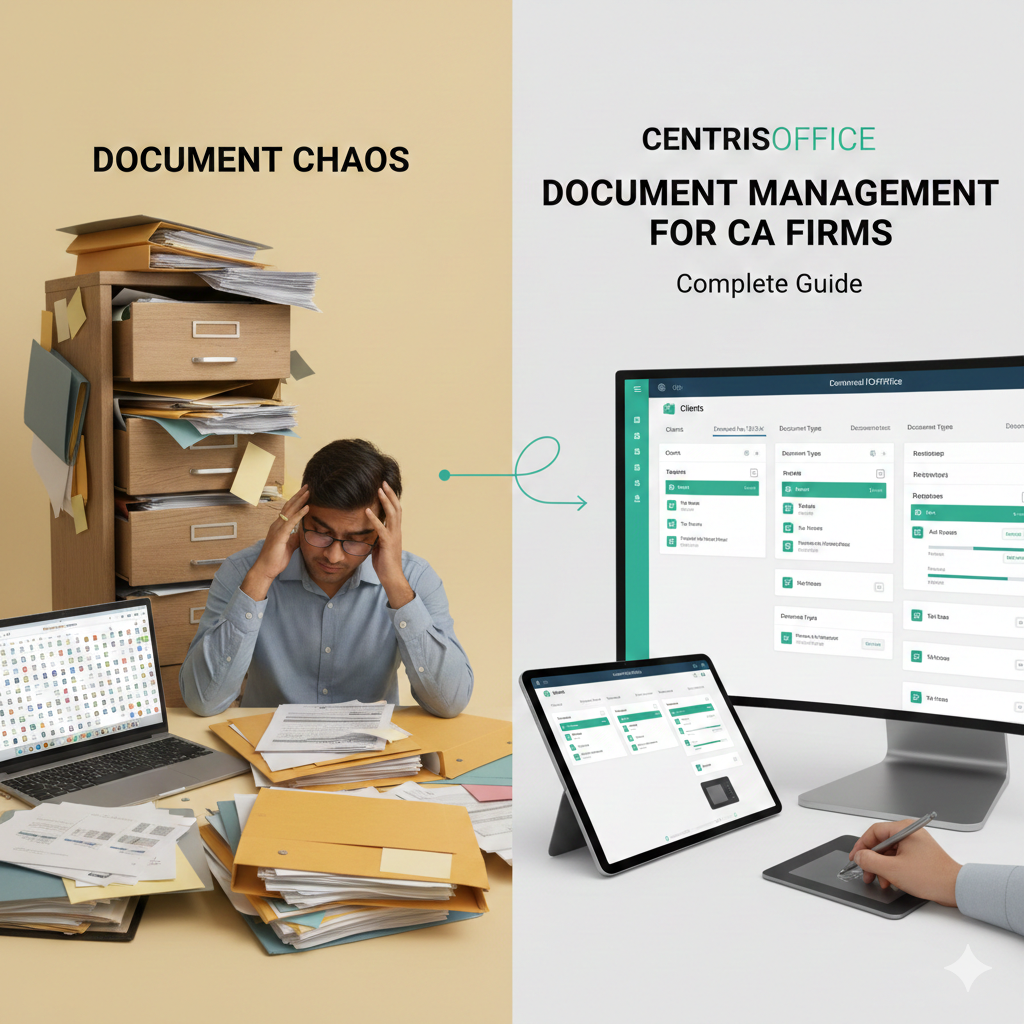
Modern document management systems like Centris Office are specifically designed to address these hidden costs. With AI-powered metadata that locates documents in seconds, you eliminate the 1.8-hour daily search burden. Financial year-wise organization and client-specific sorting mean CA firms can instantly access historical data during audits.[3]
Centris Office’s workflow automation ensures documents follow proper approval chains automatically, reducing bottlenecks and supporting compliance. Version control and audit trails are built into every interaction, giving you the documentation trail that regulators expect.
Most importantly, pricing is transparent and predictable. For a 50-person team moving from Google Workspace Business Standard to a dedicated DMS, the cost savings in license fees, productivity gains, and avoided compliance issues typically exceed ₹4–6 lakh annually..
Making the Switch: What CFOs Need to Know
The business case is clear. When you add up license costs (₹7.65L), productivity losses (₹56.25L), and compliance risks, Google Drive’s total cost of ownership easily exceeds ₹10 lakh annually for a mid-sized Indian business.
Document management system ROI extends beyond immediate cost savings. Faster file retrieval, automated workflows, and reduced compliance risk compound over years. One Bangalore-based enterprise told us their DMS investment paid for itself in seven months purely through time savings and eliminated storage fees.
The question isn’t whether you can afford to switch to a proper document management system India solution—it’s whether you can afford to keep paying the hidden costs of “free” Google Drive.
About Centris Office: Centris Office provides AI-powered document management solutions designed specifically for Indian businesses. From CA firms to real estate developers, medical institutions, manufacturing, retail, and HR, we help organizations eliminate hidden costs, ensure compliance, and transform document chaos into streamlined workflows. Visit centrisoffice.in to calculate your actual document management costs.